
License Expiring in December or January? Start Your Renewal Checklist Now
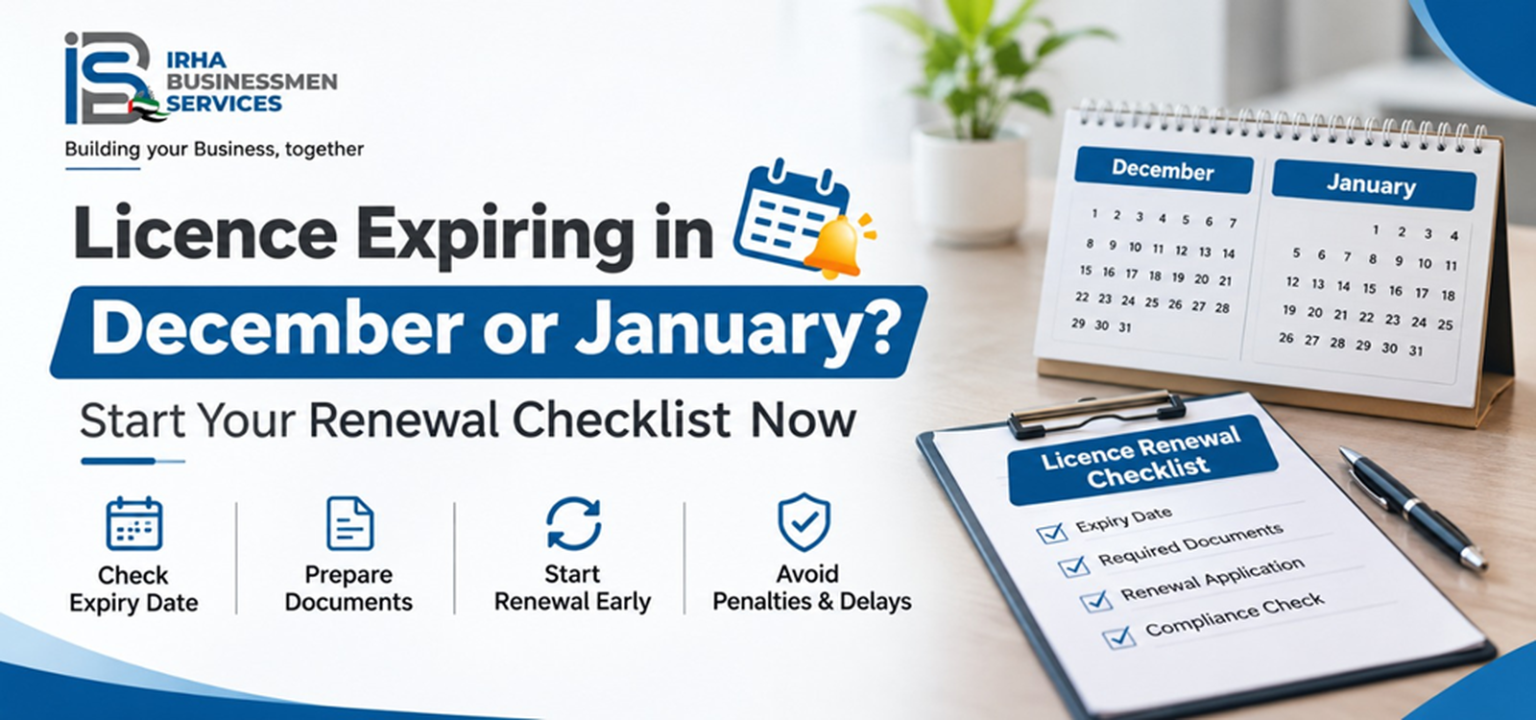
Check the expiry date printed on your trade license. If it falls in December or January, the clock is already running.
Most business owners treat renewal as a quick yearly task: pay the fee, collect the new license, move on. In practice, it is a chain of linked steps. Your tenancy contract has to be valid, your tax registrations current, your accounts in order and your fines cleared before the authority will even accept the application. One missing link can hold up the entire renewal.
Timing makes it harder at this time of year. National Day brings public holidays on 2 and 3 December, New Year’s Day falls on Friday, 1 January 2027, and many teams and approvers are away. Weeks that look available on the calendar are often shorter in real life.
This guide gives you a practical trade license renewal checklist for Dubai and the wider UAE, a week-by-week timeline, a clear picture of the risks of delay and the mistakes that cause most last-minute problems.
The Short Version
- Start the process at least 60 days before expiry, and aim to submit by day 30. If your license expires this December, begin today.
- Mainland, free zone and other emirates each have their own authority, portal and rules. Confirm yours first.
- Common blockers: an expiring tenancy contract or Ejari, missing corporate tax registration, unsettled fines and, in many free zones, audited financial statements.
- Late renewal brings monthly fines, and trading on an expired license can bring a separate, larger penalty.
Why December and January Expiries Need Extra Care
A license that expires at year-end sits right in the busiest and slowest period at once. Companies close their books, banks and clients push for year-end paperwork, and public holidays shrink the working window.
| Date | What It Means for Your Renewal |
|---|---|
| 2 to 3 December 2026 | UAE National Day (Wednesday and Thursday). Government offices and many service providers are closed, so allow extra days for any approval or payment step around this date. |
| 31 December 2026 | The last day of many licenses and of many company financial years. Audit and accounts work often peaks now. |
| 1 January 2027 | New Year’s Day, a Friday public holiday. A January expiry in the first days of the month leaves very little room for delays. |
Plan around these dates as if they were non-working days, because for approvals and payments, they are.
Step 1: Know Which Authority Controls Your License
Everything else depends on this. Renewal rules are not identical across the UAE.
- Dubai mainland: licenses are issued by the Department of Economy and Tourism (DET), formerly DED. Renewal is usually completed online through the Invest in Dubai platform, and some service channels also accept SMS-based or service center renewals.
- Free zones: the free zone authority (for example DMCC, JAFZA, DAFZA, IFZA, Meydan or others) handles renewal through its own portal, with its own fee schedule and document list.
- Other emirates: Abu Dhabi, Sharjah, Ajman and the rest have their own departments and processes.
Open your current license and note the issuing authority, license number, activities, expiry date and any linked visas or establishment card. Everything in the rest of this checklist starts from these details.
Step 2: Gather Your Renewal Documents
Exact requirements vary by authority and activity, so treat the table below as a working list and confirm it with your authority before you begin.
| Item | Why It Matters | Applies To |
|---|---|---|
| Copy of Current Trade License | Starting point for the renewal application. | All |
| Valid Tenancy Contract and Ejari (Mainland) or Lease or Flexi-Desk Agreement (Free Zone) | Authorities check that your business address is valid beyond your expiry date. An expiring lease is one of the most common blockers. | All |
| Corporate Tax Registration Certificate | Corporate tax registration is now commonly checked at renewal. Missing it can block the process and attract tax penalties. | All Taxable Persons |
| Audited Financial Statements | Many free zones require them as part of renewal, and Qualifying Free Zone Persons need them to keep the 0% rate. |
Most Major Free Zones
Some Mainland Cases |
| Shareholder and Manager Documents | Valid passports, Emirates IDs and any updated corporate documents. | All |
| Establishment Card, Labor and Visa Files | These must be current, and they often need renewal alongside the license. | Companies with Staff or Visas |
| Health Insurance and Other Compliance Proofs | Staff insurance and any activity-specific approvals may be needed. |
Companies with Employees
Regulated Activities |
| Clearance of Fines and Dues | Outstanding fines can stop the system from accepting your renewal. | All |
Tip: keep a single digital folder for renewal documents and update it every year. The second renewal is always faster than the first.
Step 3: Fix the Tax and Accounting Side First
Many renewal delays do not start at the licensing department. They start in the accounts.
- Corporate tax: confirm you are registered with the Federal Tax Authority (FTA) and that your tax registration details match your trade license. For a company with a December year-end, the corporate tax return is generally due nine months after the end of the tax period, which means 30 September 2027.
- VAT: if you are VAT-registered, make sure returns are filed and your VAT records agree with your books.
- Audit: if your free zone requires audited statements, book your auditor early. Free zones set different deadlines, often between roughly 90 and 180 days after the financial year-end, so check your own authority’s rule.
- Bookkeeping: close and reconcile your ledgers. Auditors and authorities both prefer clean, complete records.
A Qualifying Free Zone Person that does not maintain audited financial statements risks losing the 0% corporate tax rate on qualifying income, so this is a tax issue as much as a licensing one.
Step 4: Sort Out Your Premises and People
- Lease: renew your tenancy contract or flexi-desk agreement early, and register or renew Ejari if you are on the mainland. Do not wait until the last week, because the license cannot move ahead without a valid address.
- Visas and cards: check the validity of employee visas, Emirates IDs and your establishment card. Expired staff documents are easier to fix before the license lapses than after.
- Activities: if you want to add, remove or change an activity, do it now. Changing activity without approval can attract its own fine, and extra approvals take time.
Step 5: Submit the Renewal and Pay the Fees
Once the documents are ready, submit the application through your authority’s portal or service channel and pay the fee. Renewal costs vary widely by authority, legal form, activities and location, so check the exact amount on your payment voucher rather than relying on a general figure you read online.
Processing can take anywhere from a day or two to longer if the authority raises queries, which is why submitting around 30 days before expiry is wise. After approval, download the renewed license and keep a copy with your records.
Your Renewal Timeline
| When | What to Do |
|---|---|
| 60 Days Before Expiry | Confirm authority and expiry date. Check lease, Ejari, tax registrations and any fines. Book your auditor if required. |
| 45 Days Before | Renew the lease or tenancy contract. Collect shareholder and manager documents. Reconcile accounts. |
| 30 Days Before | Submit the renewal application. This is your target date. |
| 14 Days Before | Follow up on queries and pending approvals. Pay any dues. Renew linked visas and cards if needed. |
| 7 Days Before | Last check. Make sure the renewed license is issued or the payment is confirmed. |
| Day of Expiry | No new business should be done on an expired license. If you are still pending, speak to the authority or your service provider immediately. |
If your license expires this December and you are reading this in early November, you are already inside the 60-day window. Do steps 1 to 3 this week, in parallel instead of one after another.
What Happens If You Miss the Deadline
Rules and amounts differ by authority, and industry sources do not agree on every detail, so use the following as a guide and confirm the figures with your authority.
- Late renewal fines: for Dubai mainland licenses, a monthly late fine (commonly reported at around AED 250 per month, with a part-month counted as a full month) starts accruing after expiry. Some sources mention a short grace period, while others say there is none. Do not plan around one.
- Operating on an expired license: continuing to trade, invoice or sign contracts after expiry is treated as a separate violation, and an administrative fine of up to AED 5,000 is commonly reported.
- Knock-on effects: an expired license can freeze visa and labor transactions, limit access to government services and complicate banking and contracts. Prolonged non-renewal can lead to suspension or cancellation.
- Free zones: penalties and procedures vary by zone, and some set their own late fees or suspension timelines.
The fine itself is often smaller than the cost of disruption. A frozen visa, a delayed payment from a client or a blocked bank transaction can cost far more than any penalty.
Eight Renewal Mistakes to Avoid
- Waiting for the reminder. Reminders are helpful, but they are not your deadline. Set your own.
- Forgetting the lease. An expired tenancy contract or Ejari can stop everything.
- Ignoring corporate tax registration. It is commonly checked at renewal now.
- Leaving the audit to the end. Auditors are busiest around year-end, so book early.
- Overlooking old fines. Unpaid fines can block the system, so check before applying.
- Not planning for holidays. National Day and New Year shrink your working days.
- Trading on an expired license. It is a violation in its own right.
- Treating renewal as separate from visas and cards. Many are linked and expire close together.
Your License Renewal Checklist
- Expiry date confirmed and added to a shared calendar, with reminders at 60, 30 and 14 days
- Issuing authority and portal confirmed (DET, free zone or other emirate)
- Tenancy contract, Ejari or free zone lease valid well beyond expiry
- Corporate tax registration certificate available and details matching the license
- VAT returns filed and reconciled (if VAT-registered)
- Audited financial statements prepared and submitted (where required)
- Shareholder, manager and company documents current
- Establishment card, employee visas, Emirates IDs and insurance checked
- All fines and dues cleared
- Renewal application submitted by day 30
- Renewed license downloaded and saved in the company folder
Frequently asked questions
Start about 60 days before expiry and aim to submit the application around 30 days before. This gives you time to fix the lease, tax records, audit and any fines before the deadline.
Yes. Mainland licenses are generally renewed through the Invest in Dubai platform or authorized service channels, and free zone companies renew through their own authority’s portal.
You may face monthly late fines, and trading during the gap can be treated as a separate violation. Visa, labor and banking processes can also be affected, so it is better to renew before the expiry date.
Many major free zones require them, though the deadline and format differ by authority. Qualifying Free Zone Persons also need audited accounts to keep the 0% corporate tax rate, so plan the audit well before renewal.
It is commonly checked during renewal, and operating without a required registration can lead to penalties from the Federal Tax Authority. Confirm your registration is complete before you apply.
It is not required, but it can save time if your renewal involves multiple authorities, audited accounts, visas or a lapsed license. A good provider will check your documents, deal with the portals and catch problems early.