
Personal Accident Insurance in the UAE: What Every Resident, Rider and Employer Should Know
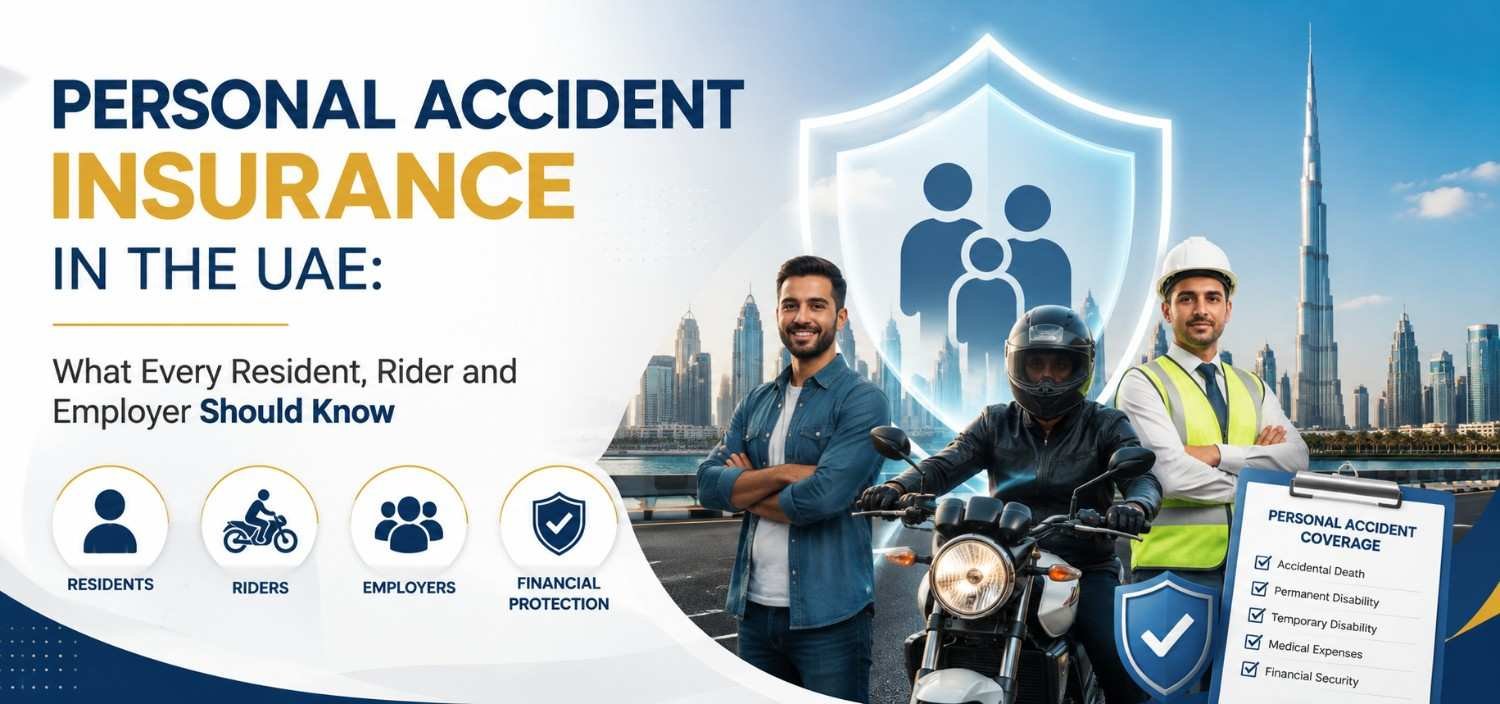
Accidents rarely send a warning. A missed step at a construction site, a collision on
Sheikh Zayed Road, a fall while making a delivery — any of these can change a
person’s life and finances in seconds. That’s the gap Personal Accident Insurance is
built to fill.
Book Your Free Consultation
This guide breaks down how the cover works in the UAE, who benefits most from it,
what it typically pays for, and what to check before you sign up — whether you’re an
individual resident, a rider, or a business owner arranging cover for staff.
Note: This article is written for general awareness. Actual benefits, premiums,
exclusions and eligibility rules vary between insurers and plans. Always read the policy
schedule and full terms before buying, and confirm details directly with a licensed
provider.
What Personal Accident Insurance Actually Covers
At its core, this type of policy pays out a fixed, pre-agreed sum if the insured person is
killed or disabled as a direct result of an accident. It’s not a substitute for health
insurance — it’s a financial cushion for the family or the individual when an accident
disrupts their ability to earn or survive.
Picture a self-employed delivery rider hit by a car while on a job. If the injury leaves him
permanently unable to work, this policy — not his medical card — is what pays out a
lump sum based on his coverage level.
How It Differs From Health Insurance
| Personal Accident Insurance | Health Insurance | |
|---|---|---|
| Purpose | Cushions the financial hit of an accident | Pays for treatment of illness or injury |
| Payout style | One-time lump sum | Direct billing or reimbursement |
| Covers sickness | No | Yes |
| Covers accidental death | Yes | Rarely as a lump sum |
| Replaces lost income | Partially, via disability benefits | No |
| Hospital bills | Only accident-related, and often limited | Core purpose |
Think of the two as complementary, not interchangeable. Having health insurance
doesn’t mean you’re covered if an accident leaves you permanently disabled and
unable to earn.
The Core Benefits You'll Usually Find
Policies differ by insurer, but most UAE personal accident plans build around these
components:
Accidental death benefit — A lump sum paid to your nominee or legal heir if you die from a covered accident during the policy term. It’s meant to help a family cover rent,
loans, school fees and daily costs while they regroup
Permanent Total Disability (PTD) — Triggered when an accident leaves you unable to
work again, in the way the policy defines it. Depending on the severity and the medical
evidence, this can pay out close to the full sum insured.
Permanent Partial Disability (PPD) — For injuries that cause lasting but partial
impairment — the loss of an eye, a limb, or reduced use of a body part. The payout is
calculated as a percentage of the sum insured, based on a disability scale in the policy
document.
Accident-related medical expenses — Some plans reimburse costs tied directly to the
accident, such as emergency care, surgery or ambulance fees. This is often a separate,
smaller sub-limit — don’t assume it matches your death or disability cover.
Temporary total disability — A weekly or monthly payment if you’re unable to work for
a period after the accident. Particularly useful for freelancers, drivers and riders who
don’t have paid sick leave. Not every plan includes it, so check separately.
Repatriation benefit — For expatriates, some policies help cover the cost of sending remains home after an accidental death. Limits vary widely.
Geographic scope — Some plans cover you 24/7 anywhere in the world; others apply
only within the UAE, or attach conditions to travel. Always confirm this in the schedule
rather than assuming.
Who Actually Needs This Cover?
This isn’t just a policy for high-risk jobs. It’s worth considering for anyone whose
household depends on their income:
Businesses with staff regularly on the road, at client sites, or on warehouse and construction floors often look at Group Personal Accident Insurance as part of their employee welfare package.
A Closer Look: Riders and Delivery Workers
Riders and couriers face far more road exposure than most professions — but that
doesn’t mean a standard personal plan automatically covers commercial riding. Before
signing up, get written confirmation on:
Marketing lines like “cover for riders” aren’t a substitute for checking the fine print. Your
occupation and exact riding activity need to be disclosed accurately when the policy is
issued — misdeclaring it is one of the fastest ways a claim gets rejected.
What’s Usually Excluded
No policy covers everything. Common exclusions across UAE personal accident plans
include:
UAE regulations require insurers to make liability-limiting clauses clear and to have
them acknowledged by the policyholder — but that doesn’t replace actually reading
them.
Personal Accident Cover vs Motor Insurance
A frequent misconception: that motor insurance already protects the driver personally. It
usually doesn’t — at least not fully
| Cover Type | What It’s For |
|---|---|
| Motor third-party liability | Damage or injury you cause to others |
| Comprehensive motor insurance | Your vehicle’s damage, plus third-party liability |
| Driver personal accident add-on | Limited personal benefits for the named driver, if included |
| Individual personal accident policy | Your own death/disability and related benefits |
| Group personal accident policy | Employer-arranged cover across a team |
For commercial drivers and riders especially, it’s worth mapping out which of these you
actually have — rather than assuming motor insurance has you personally covered.
If you’re financing a vehicle, it’s worth reviewing both your insurance and loan terms together — our vehicle loan assistance service can guide you through the financing side.
What Drives the Price
There’s no flat rate for this type of insurance. Premiums shift based on:
A cheaper plan often means a lower payout ceiling, tighter medical limits, or missing
benefits — so compare on coverage and exclusions, not price alone.
Checklist Before You Buy
Under the UAE Central Bank’s Consumer Protection Standards, licensed institutions are
required to clearly explain what a product covers, and what it doesn’t, before you buy.
Filing a Claim: What to Expect
Keep copies of every report, receipt and reference number — incomplete paperwork is
one of the most common reasons claims stall.
Documents You'll Typically Need
For most claims:
For road accidents, add:
For disability claims, add:
For accidental death claims, the nominee typically needs:
Frequently Asked Questions
- Is this insurance mandatory in the UAE? Generally no for individuals, though some employers, lenders or contracts may require it depending on the role or activity.
- Does it cover illness? No — it’s built around accidental injury, not disease. That’s what health insurance is for.
- Are road accidents covered? Yes, if road accidents fall within the policy’s scope and no exclusion applies — licence validity and declared occupation matter a lot here.
- Is delivery work automatically covered? Not necessarily. It depends on the insurer, and commercial riding needs to be disclosed and confirmed in writing beforehand.
- Can expatriates buy this cover? Yes, most plans are open to eligible residents and expatriates, subject to age limits and underwriting rules.
- How is this different from life insurance? Accidental death cover only pays if death results from a covered accident. Life insurance typically pays out on death from a broader range of causes.