
The Real Cost of Choosing a Business Setup Only Because It Was Cheaper
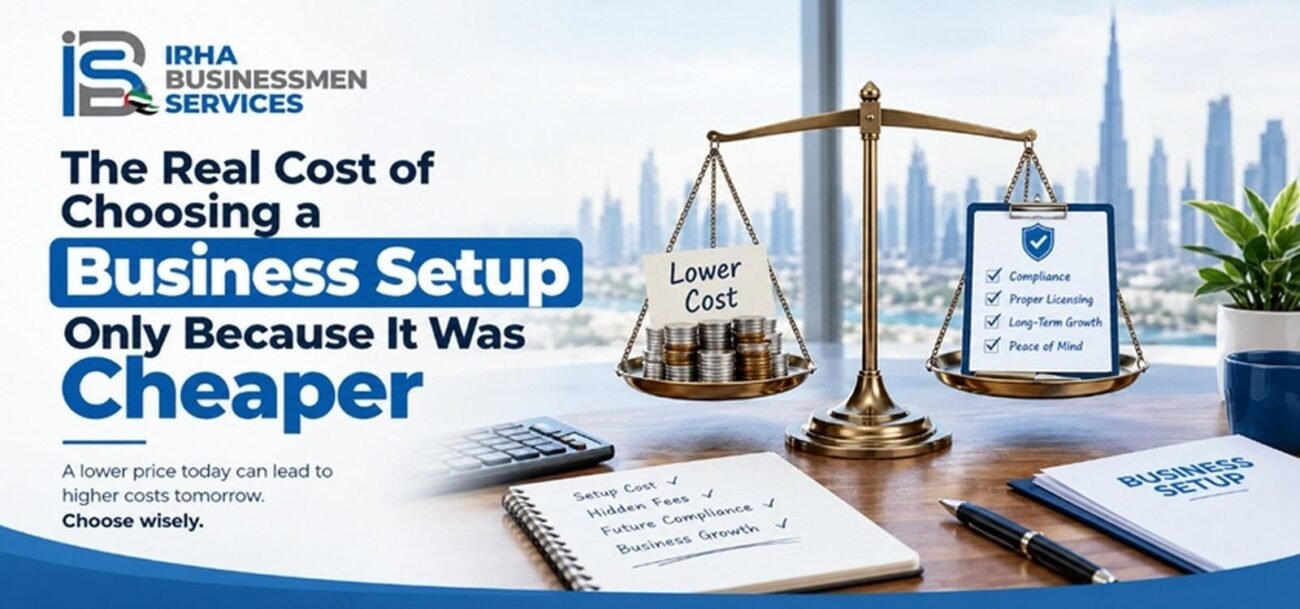
Picture two quotes sitting side by side. One is noticeably lower, the other a little higher, and both promise to register your company. Most new founders do the obvious thing and go with the lower number.
That instinct is natural, but it often hides a costly assumption: that both packages deliver the same result. In practice, a cheap business setup and a well-planned one can behave very differently once the paperwork is done. The invoice is just the opening cost. Banking, compliance, renewals, hiring and growth all depend on the structure you picked on day one.
This guide walks through where the extra money really goes, how to tell a bargain from genuine value, and how to choose a setup you will not regret in eighteen months.
The Quote Is Only the Visible Part of the Cost
View initial setup costs like an iceberg: what you see at first is only a tiny fraction of the total. The number on the quote covers registration. What sits below the surface is everything that keeps your company running legally and smoothly afterwards:
- Annual renewals and government fees
- Costs of changing or widening your business activity
- Permits, visas or approvals for you and your team
- Accounting, tax filings and statutory reporting
- Time lost while waiting for bank approval
- Redesign your operational framework the moment it begins hindering your future plans.
When founders say a setup “turned out expensive,” it is nearly always these submerged items they mean, not the original fee.
Why the Lowest Price Is So Tempting
Nobody chooses a bargain package out of carelessness. The pull is real, and it usually comes from four places:
- Tight starting budgets. Early-stage cash is precious, and every saving feels like extra runway.
- Unproven ideas. Spending heavily on a concept that has not found customers yet feels risky.
- Quotes that are hard to compare. Two proposals can look identical while quietly including very different things.
- The rush to launch. Cheap offers are often sold as fast and effortless, which suits an impatient founder.
Wanting to save is sensible. The trouble starts when the saving comes from the wrong place.
Seven Ways a Bargain Setup Becomes Expensive
1. Fees that arrive after you have paid
A low headline price frequently leaves things out. Processing charges, administration fees, address requirements and renewal costs may all be billed separately. By the end of the first year, the “discounted” package can cost as much as, or more than, a transparent one that listed everything up front.
Practical move: request a written, itemised quote that includes what you will pay at renewal.
2. A company structure out of sync with your actual operations.
Different structures permit different activities, customer types and trading locations. If your cheap option does not cover how you really earn money, you may end up needing a second licence, a changed activity, or a fresh registration altogether. Each of those costs more than getting it right the first time.
3. Banking and payment friction
Banks look closely at company type, declared activity and supporting documents. A hastily assembled setup can mean slow account approval, repeated document requests, rejection, or tougher balance requirements. Payment gateways can be equally picky.
A company without a working bank account cannot invoice, pay suppliers or take card payments. At that point, how cheap the registration was stops mattering.
4. Compliance slips and penalties
Some low-cost providers see their job as finished once your certificate is issued. Fines don’t just happen; they stem from missed deadlines, overdue renewals, and missing records. A single penalty can wipe out whatever you saved at the start, and repeated problems can threaten your licence.
5. Thin support when something goes wrong
Support never appears as a line item, yet it decides how painful a problem becomes. Red flags to watch for: slow responses, no single point of contact, zero compliance guidance, and radio silence on changing rules. When an urgent issue lands, a responsive adviser is worth far more than the discount you chased.
6. A ceiling on growth
Plenty of founders pick a structure for the business they have today. Then the business grows. A setup chosen purely on price may limit team visas, office options, partner or investor entry, or expansion into new markets. Upgrading down the road inevitably triggers administrative hassles, added expenses, and costly disruptions to daily operations.
7. Quiet damage to credibility
Clients, suppliers, banks and investors often check your legal structure, address, licensed activities and compliance record before they commit. A flimsy setup can make careful partners hesitate. You rarely see the deals that never happened, but they are a genuine cost.
Cheap Versus Good Value: A Side-by-Side View
The table below shows how the two approaches typically differ in practice.
| Factor | Bargain-first setup | Value-first setup |
|---|---|---|
| Quote clarity | Short list, extras billed later | Itemised, renewal costs shown |
| Activity coverage | Often generic or narrow | Matched to your real business model |
| Banking readiness | Left for you to sort out | Planned with banking requirements in mind |
| Compliance help | Usually not included | Reminders, filings or guidance available |
| Support after registration | Limited or slow | Named contact and clear channels |
| Room to grow | Upgrades mean rework | Built to scale with your team |
| Total cost over two years | Often higher than expected | Predictable and easier to budget |
A Two-Year Illustration
The following is a hypothetical scenario, not a case study, but it reflects patterns founders commonly describe.
Founder A chooses the lowest quote and feels pleased with the saving. Within twelve months she pays to alter her activity, waits weeks for a bank to approve her account, and receives a late-filing penalty. By year two she is paying to restructure the company.
Founder B spends somewhat more at the start on a setup designed around his actual plans, with clear renewal costs and compliance support. His bank account opens without drama, his deadlines are tracked, and his company can add team members without a restructure.
Two years down the road, Founder A usually ends up paying a higher total price—measured in lost capital, wasted hours, and constant friction. That is the real meaning of the word “cheap.”
How to Choose a Setup Without Overspending
Paying more is not the goal. Paying for the right things is. Work through these steps in order:
- Describe your business precisely. Write down what you sell, who buys it and where those customers are.
- Look three to five years ahead. Choose a corporate setup designed for your future growth trajectory, rather than your current baseline.
- Demand an itemised quote. Include registration, renewal, permits, address and compliance costs.
- Test banking compatibility. Ask how easily the structure supports business accounts and online payments.
- Compare inclusions, not totals. Audit what each provider actually delivers.
- Clarify who handles compliance. Find out who tracks renewals, filings and updates.
- Book a short consultation. An hour with an experienced adviser can prevent months of corrections. You can also cross-check basic requirements on the official government registration portal for your jurisdiction.
Key Questions to Ask Before Paying Any Vendor
- What exactly is covered under this base fee, and what falls outside its scope?
- What will renewal cost next year?
- How are activities added or changed later, and what does that cost?
- Will this setup pass compliance with top banks and payment platforms?
- What help do I get once registration is complete?
- Are there any charges missing from the quote?
Warning Signs to Watch For
- Artificial urgency and high-pressure tactics forcing an immediate decision.
- Vague answers about renewals or extra fees.
- No written breakdown of costs.
- Over-promising that every activity, bank account, and market entry will be trouble-free.
- No clear contact person after payment.
Any one of these deserves a pause. A combination of these red flags is your cue to look elsewhere.
Frequently Asked Questions
No. A low-priced package can be perfectly fine if it covers your exact activity, works with banks and payment providers, and leaves room to grow. The mistake is making price the only test and skipping those checks.
Renewals, visa or permit charges, fees for changing or adding activities, address or office requirements, administration charges, and the cost of accounting and filings are the usual surprises.
Ask both providers for a line-by-line written quote that includes year-two renewal costs. Then compare what each one actually covers, such as support, compliance help and flexibility, instead of comparing the headline numbers alone.
In many cases you can, but it usually means new paperwork, fresh fees and some downtime. In many cases, launching a new structure requires officially liquidating the old one first, highlighting why making the right choice from day one preserves your capital.
Ask what is included, what renewal will cost, how activities can be changed, whether the structure suits your banking needs, and what help you receive after registration is complete.